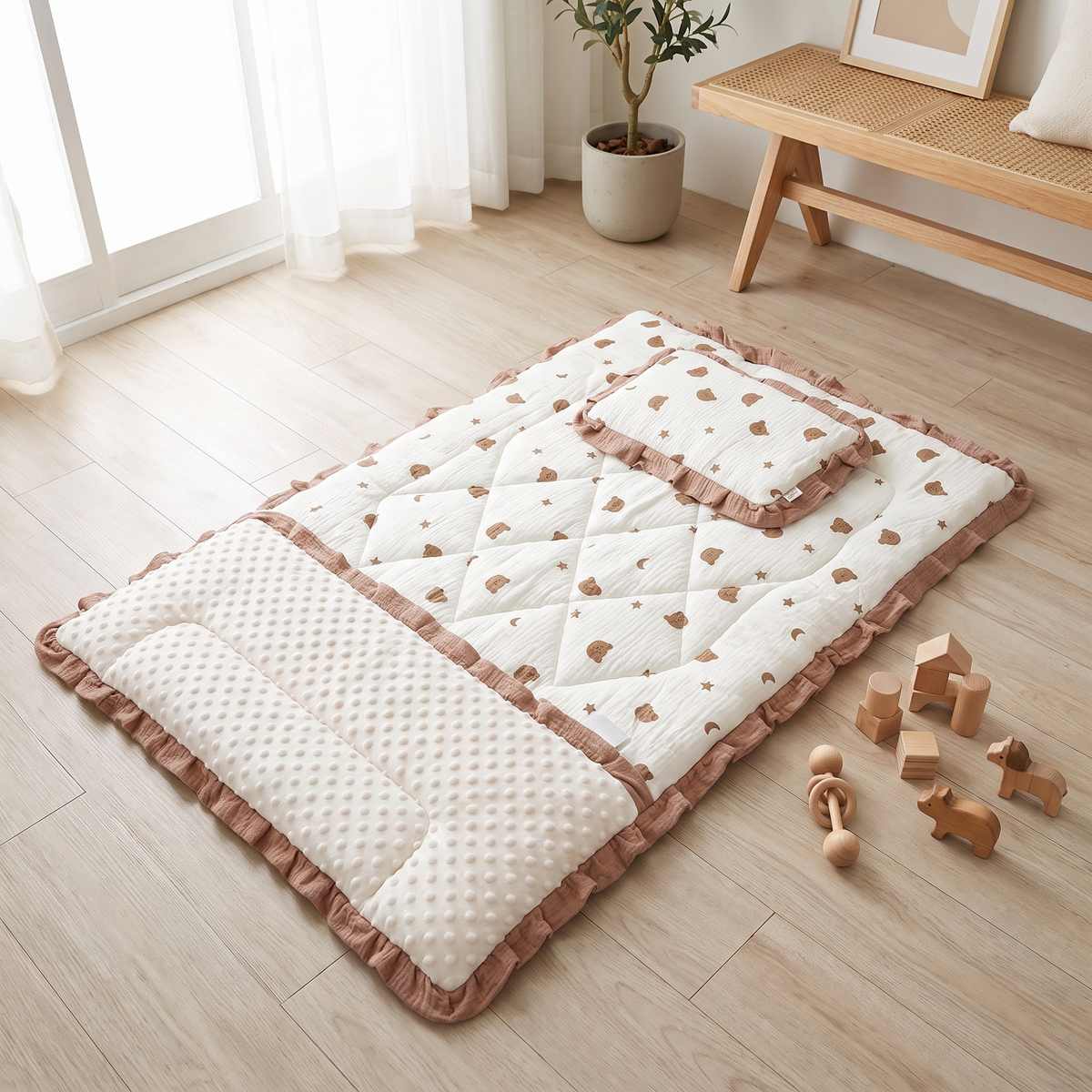
A padded mat gives babies and toddlers a softer, safer place to explore the floor. Whether you call it a baby play mat, infant play mat, baby activity mat or toddler play mat, the goal is the same: a comfortable zone for tummy time, rolling, crawling, early steps and everyday play. The right padded baby mat also makes life easier for parents by protecting floors, simplifying cleanup and giving little ones a defined space for movement.
Why does a padded baby mat matter during early development?
Much of a baby's early learning happens on the floor. During tummy time, babies practice lifting their heads, strengthening their necks, pushing through their arms and gradually building the control they need for rolling and crawling. A cushioned baby floor mat makes that practice more comfortable, especially on hard surfaces such as wood, tile or laminate.
Padding also gives babies the confidence to move. When the surface feels firm but forgiving, they can wiggle, reach, pivot and scoot without lying directly on a cold, hard floor. For toddlers, a padded toddler play mat softens the everyday tumbles that come with standing, cruising along furniture and testing their balance.
A mat is not a substitute for supervision, but it does create a predictable play area. Put toys, books and soft blocks in one spot and encourage independent exploration while you stay nearby.

Comfort that supports tummy time, crawling and first steps
Comfort is the most immediate benefit of a padded baby playmat. Babies spend a lot of time on their backs, bellies, sides, knees and hands, so the cushioning beneath them matters. A mat that is too thin feels much like the floor, while one that is too soft makes it harder to push up or balance.
For tummy time, padding reduces pressure on the chest, elbows, knees and hips, which makes short sessions more pleasant and easier to fit into the day. As babies begin to crawl, the mat gives knees and palms a smoother surface to press against.
For early walkers, a padded floor mat creates a gentler landing zone. Toddlers are naturally unsteady while learning to squat, turn, climb and walk, and a cushioned surface takes the harshness out of small falls.
Everyday safety benefits parents appreciate
Safety is often why parents start looking for an infant play mat. A good mat reduces direct contact with hard flooring, cold surfaces, dust and floor-level mess, and it defines where baby play happens, which makes it easier to keep small objects out of reach.
When comparing options, look for materials described as non-toxic and free from BPA, phthalates, lead, formaldehyde and harsh chemical odors. If a product lists safety testing, review it carefully rather than relying only on marketing language. Babies touch, mouth, roll and drool on these surfaces, so material quality matters.
Traction matters too. A baby mat should lie flat and stay stable during play. Mats that curl at the edges, slide on slick floors or separate too easily can become tripping hazards for adults and toddlers.
Helpful safety features to look for
- Cushioning with stability: soft enough to absorb everyday bumps, firm enough for pushing, crawling and standing practice.
- Non-toxic materials: clear information about what the mat is made from and what it avoids.
- Low-odor surface: a strong chemical smell means the mat needs airing out or may not be right for your home.
- Non-slip backing or grip: especially useful on hardwood, tile and laminate.
- Secure construction: fewer gaps mean fewer places for crumbs or tiny fingers to get caught.
- Easy-to-clean finish: a wipeable surface lets you deal quickly with spills, spit-up and snack crumbs.
Always use a padded mat for awake, supervised play only. Babies should sleep on their back on a firm, flat crib or bassinet mattress, never on a soft mat or pillow.
A cleaner play space with less daily stress
Babies are messy, and floor play makes that obvious fast. A padded play mat creates a washable or wipeable barrier between your child and the floor, so you clean the mat and the toys instead of the whole room.
Foam and coated mats are popular because most spills come off with a damp cloth and mild soap. Fabric and quilted mats feel cozy and look lovely, but they need more frequent laundering and careful drying. Neither is automatically better; it depends on how you use the space.
A simple routine works best: wipe spills right away, do a quick clean after heavy use, give the mat a deeper clean when needed, and let it dry completely before folding, rolling or storing it.
How do you choose the right baby play mat?
Match the mat's material, thickness, size, cleaning needs and storage to your baby's stage and your home. A newborn who mostly needs tummy time may love a soft, cozy surface, while a crawler or toddler usually needs more room and firmer support. The best baby mat is the one you will actually use every day.
Thickness: a moderately thick foam mat, around 1 inch, cushions hard floors without feeling unstable. On carpet you need less padding, but a clean, defined play zone still helps. If you move the mat between rooms or take it to family visits, portability matters more than maximum thickness.
Size: a small infant mat works for early tummy time, but babies grow quickly. Once they roll or crawl, a larger floor mat gives them room to move without leaving the protected area right away.
Quick buying checklist
- Where it will be used: hardwood, tile, carpet, nursery, living room or playroom.
- Who will use it: newborn, crawler, toddler, siblings or mixed-age play.
- How often it needs cleaning: occasional tummy time or daily snacks and active play.
- How much space you have: a permanent play area or compact apartment storage.
- Portability: foldable, roll-up or easy to take apart.
- Design: bright learning patterns, neutral colors, reversible prints or simple textures.
- Material: foam, fabric, coated surface, tiles or layered padding.
Comparing common types of padded baby mats
Different mats solve different problems. Knowing the trade-offs helps you avoid a mat that looks good online but frustrates you every day.
| Mat type | Best for | Main advantages | Possible drawbacks |
|---|---|---|---|
| Foam roll-up mat | Living rooms, playrooms, hard floors | Large smooth surface, easy to wipe, often reversible | Can curl if stored tightly |
| Interlocking foam tiles | Custom room shapes, growing play zones | Modular size, replaceable pieces | Seams collect crumbs; toddlers may pull pieces apart |
| Quilted or fabric mat | Young infants, cozy nursery use | Soft feel, attractive prints, easy to roll up | Absorbs spills; cleaning takes longer |
| Foldable mat | Small spaces, grandparents' homes, travel | Easy to move and store, quick setup | Folds create seams; quality varies |
| Reversible playmat | Shared family spaces | Two designs in one | Still needs the right thickness and grip |
On slick floors, prioritize grip and stability. With pets, look for durability and easy cleaning. If your toddler loves taking things apart, a single-piece mat may be less hassle than tiles.

Our padded mats
- Padded Baby Floor Mat: a thick, quilted, cotton-filled mat with a soft velvet top, 24 x 39 in, in six cute prints. Rolls out for tummy time and rolls up again.
- Foam Play Mat, 8 Interlocking Tiles: 1 inch thick, wipe-clean and quiet underfoot, in 11 colors. Ideal for hard floors and crawlers.
- Large Reversible Play Mat: a big 71 x 47 in wipe-clean mat with letters on one side and a farm scene on the other, great as a defined play zone on carpet.
All with free US shipping, sent the same day. For more help choosing, read our guide to choosing the best play mats for babies.
Design can encourage better play
A baby activity mat does more than cushion the floor. Colors, patterns and textures invite movement and attention. High-contrast designs catch a young baby's eye, while letters, animals and farm scenes support naming games and pretend play as children grow.
Visual stimulation should feel useful, not overwhelming. A busy mat in a busy room can look chaotic, so many families like reversible mats: a playful side for active time and a calmer side for shared living spaces.
Making the mat last longer
A padded mat goes through a lot: drool, spills, toy impacts, crumbs, pet paws and toddler experiments. Follow the care instructions, especially for fabric and printed foam. Mild soap and water are usually enough; avoid harsh cleaners unless the product allows them, and dry the mat thoroughly.
Rotate the mat now and then if one area gets more wear. Roll roll-up mats loosely, fold foldable mats along their intended seams, and keep tiles together so pieces do not go missing. If a mat becomes torn, heavily dented, slippery or hard to clean, replace it.
A practical addition to everyday family life
A padded baby mat meets several needs at once: comfort for babies, peace of mind for parents, protection for floors and a flexible space for play. It supports tummy time in the early months, crawling practice later and busy toddler movement after that. The most practical choice is the mat that fits your floor, cleans easily, stays stable and gives your child room to grow.
Frequently asked questions
What are the benefits of a padded baby mat?
More comfortable tummy time, softer landings for crawlers and early walkers, protection for your floors, and a clean, defined play space that is easy to wipe or wash.
Is a padded mat safe for newborns?
Yes, for awake, supervised tummy time and back play, as long as the surface is firm enough for your baby to push up. Never let a baby sleep on a soft mat or pillow.
How thick should a padded play mat be?
On hard floors, around 0.5 to 1 inch of foam gives good cushioning while staying stable. On carpet, a thinner mat is usually enough.
Foam or quilted padded mat?
Foam wipes clean easily and cushions hard floors well. Quilted mats feel softer and cozier and roll up easily, but need washing more often.


