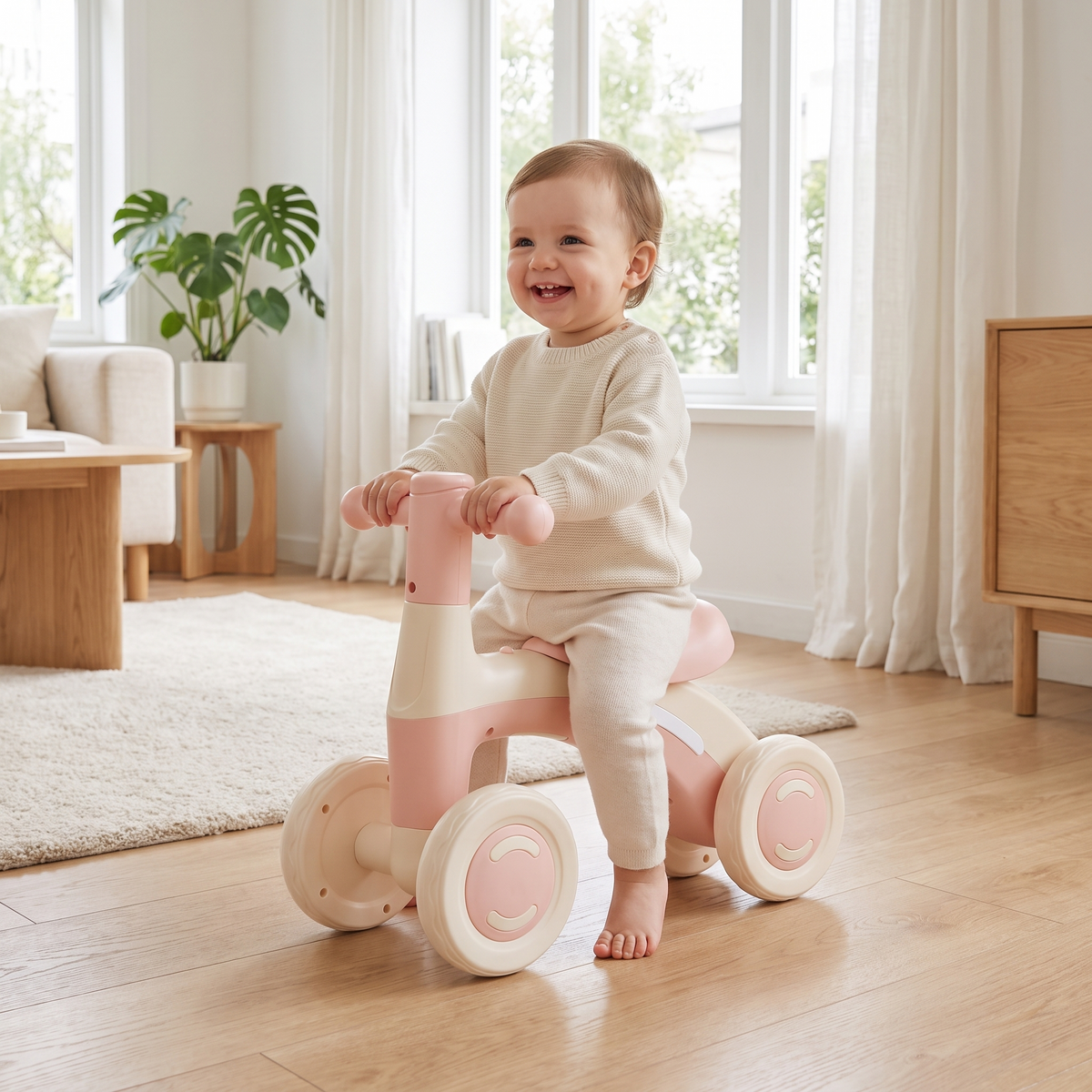
A baby walker can be a fun way to encourage movement, curiosity and early confidence when it is chosen carefully and used at the right stage. The biggest distinction for parents is between seated infant walkers with wheels, which pediatric safety groups warn against, and push-style toddler walkers that support supervised practice for children who are already pulling up or cruising.
This guide explains the realistic developmental benefits, the safety limits, and how to choose a baby walker toy that supports play without rushing your child's natural pace.
Are baby walkers actually good for development?
Baby walkers can support development when they are used as play tools, not shortcuts to walking. A push-style toddler walker may help a child practice balance, weight shifting, coordination and confidence once they already show readiness for supported standing.
Seated baby walkers with wheels are different. The American Academy of Pediatrics warns that infant walkers are not safe, and the U.S. Consumer Product Safety Commission regulates infant walkers because of fall and injury hazards.
That difference matters because babies do not learn to walk simply by being placed upright. Walking develops through many small skills: rolling, sitting, crawling or scooting, pulling up, cruising along furniture, lowering to the floor and taking independent steps. A toddler walker toy works best when it complements those milestones rather than replacing floor time, tummy time or hands-on play.
The developmental skills a walker can encourage
A well-matched walker gives a child something stable and interesting to interact with while practicing movement. The benefit is not that the product "teaches" walking by itself. The benefit is that it creates a playful reason to stand, reach, push, pause and try again.
Balance and body awareness
When a child pushes a toddler walker with wheels, they begin to feel how their body moves through space. They learn that leaning too far forward makes the walker move faster, while standing tall and slowing their steps gives them more control. This kind of feedback helps children connect movement with cause and effect.
Body awareness also grows through small adjustments. A child may widen their stance, bend their knees or grip the handle differently after a wobble. Those little corrections are part of motor learning, especially when an adult is nearby to slow the walker and keep the space safe.
Leg strength and coordination
Push walkers can encourage repeated practice with standing and stepping. Each push involves the legs, core, hips, feet, arms and hands working together. That coordination is useful because walking is not just about strong legs; it also requires rhythm, posture and the ability to shift weight from one side to the other.
A toddler walker toy may also motivate a reluctant cruiser to move beyond the sofa or coffee table. The toy gives them a destination and a reason to keep trying, and the fun of moving it across the room makes practice feel like play rather than effort.
Confidence and independence
Development is emotional as well as physical. A child who can move toward a parent, reach a favorite toy or explore a familiar room often shows pride and excitement. A baby walker toy can support that confidence by giving the child a manageable challenge.
Keep expectations realistic. Some children take to a walker quickly, while others prefer crawling, cruising or holding an adult's hands. Both patterns can be normal, and the CDC encourages parents to watch developmental milestones over time rather than compare children moment by moment.
Seated walkers and push walkers are not the same
Many parents search for a baby walker and find very different products under the same label. Some are seated devices where a baby sits inside a frame and propels it with their feet. Others are push toys used from behind by a child who is already standing.
A seated infant walker with wheels can let a baby move quickly before they have the balance or judgment to avoid hazards. The AAP states that walkers are never safe to use, even with an adult close by, because babies can move into danger very quickly. The CPSC describes infant walkers as mobile units that let a child move across a surface while seated or standing within the walker, and walkers sold in the US must meet federal safety rules.
A push-style toddler walker, on the other hand, is used by a child standing behind it. This type may be more appropriate for older babies and toddlers who can pull to stand, cruise or take supported steps. Even then, it should be used only with close supervision and in a prepared space.
How can a toddler walker toy support learning through play?
A toddler walker toy supports learning by combining movement with sensory, problem-solving and social play. Many walkers include buttons, blocks, shape sorters, music panels, mirrors or pretend-play features that invite children to reach, press, grasp, turn and explore. These activities build fine motor skills and attention while the walking frame encourages gross motor practice.
Useful play-based features include:
- A sturdy handle that is easy for small hands to grip without forcing the shoulders too high.
- Adjustable wheel resistance or slow-rolling wheels to help prevent the walker from moving too quickly.
- Interactive front panels with simple cause-and-effect activities, such as spinning gears or sliding pieces.
- Open-ended toys like blocks or pretend items that keep the walker useful after early walking practice.
- A broad, stable base that helps reduce tipping during supervised use.
The best baby walker toy is not always the busiest or loudest one. A simple, stable walker that encourages pushing, stopping, squatting and reaching can be more useful than a product with too many distractions.
Choosing the right walker for your child's stage
A walker should fit your child's current abilities, not the milestone you hope comes next. If your baby is not yet pulling up or bearing weight comfortably, floor play is usually more appropriate. If your child is already cruising along furniture, a toddler walker with wheels may provide a new way to practice supported movement.
Check your child's posture: their feet should rest flat on the floor when standing behind a push walker, and their arms should not be forced into an awkwardly high position.
A practical buying checklist:
- Match it to readiness. Look for signs such as pulling to stand, cruising and controlled lowering to the floor.
- Check stability. Choose a wide base and avoid lightweight designs that tip easily.
- Control the speed. A good toddler walker with wheels should move slowly enough for beginner steps.
- Inspect the materials. Look for smooth edges, secure parts and age-appropriate pieces.
- Use it in the right space. Keep stairs, rugs, cords, thresholds and sharp furniture corners out of the practice area.
- Supervise every session. A walker is not a babysitter or a substitute for an adult nearby.
If you are considering a seated infant walker with wheels, read the manufacturer's age and safety information carefully and speak with your pediatrician first. For many families, a stationary activity center or a push walker used later is a better fit.
Safety makes the benefits possible
The developmental value of any walker depends on safe use. A child who is moving with support still needs a clear environment and an attentive adult, especially around stairs, kitchens, bathrooms, pets, fireplaces and furniture with hard edges.
Set up a short practice area on a flat surface. Remove loose rugs, block stairways and keep the walker away from anything the child could pull down. Short sessions are often better than long ones, because tired legs lead to more stumbles.
Avoid using a walker to force early walking. Independent walking happens when the child's body is ready. If you notice persistent stiffness, one-sided movement, toe-standing, delayed milestones or other concerns about your child's movement, ask your pediatrician for guidance.
Walker play works best with floor time
A walker should be only one part of a movement-rich day. Floor time gives babies freedom to roll, pivot, crawl, climb over cushions, reach for toys and practice transitions. These movements build the strength and coordination that later support standing and walking.
A balanced movement routine might include:
- Tummy time or floor play for core and shoulder strength, for example on a kick and play piano gym.
- Crawling, scooting or rolling games on a soft, wipe-clean foam play mat.
- Supported standing at a low table or sofa.
- Cruising along stable furniture.
- Short, supervised sessions with a push-style walker toy.
- Plenty of barefoot time indoors, when safe, so the feet can grip and sense the floor.
Children learn through many positions, not just upright movement. The more ways they can safely explore, the more chances they have to build strength, balance, curiosity and confidence.
For the next stage: ride-on play
Once your toddler is steady on their feet, a low ride-on like our 4-wheel baby glider bike lets them push off with both feet and glide, building balance and leg strength in a new way. Always use it on flat floors, away from stairs, with an adult nearby. Find more floor-play favorites in play mats and toys, with free US shipping on every order.
The takeaway for parents
Baby walkers can offer developmental benefits when you choose the right type for the right stage. A push-style toddler walker can encourage balance, coordination, leg strength, confidence and playful exploration for a child who already shows readiness. Seated baby walkers with wheels need extra caution, and pediatric safety guidance warns against their use because of injury risks.
The smartest approach is simple: prioritize safety, follow your child's cues, and treat any walker as a supervised play tool rather than a promise of faster walking. With a clear space, a stable design and plenty of floor-based movement, a walker can become one helpful part of your child's bigger developmental journey.
Frequently asked questions
Do baby walkers help babies walk sooner?
No. Walkers do not make babies walk earlier. Walking develops when the body is ready, through rolling, crawling, pulling up and cruising. A push walker can make practice more fun for a child who is already ready.
Are seated baby walkers safe?
The American Academy of Pediatrics advises against seated infant walkers with wheels because babies can move quickly into hazards such as stairs. Talk to your pediatrician before using one.
When can a baby use a push walker?
Usually once they can pull to stand and cruise along furniture, often somewhere between 9 and 12 months, though every child is different.
What is better than a walker for early development?
Plenty of supervised floor time: tummy time, rolling, crawling and cruising. These build the strength and balance children need to walk.


